
String Method: Illustrated Steps
Follow the pictures below, then use the detailed instructions and size chart further down this page.
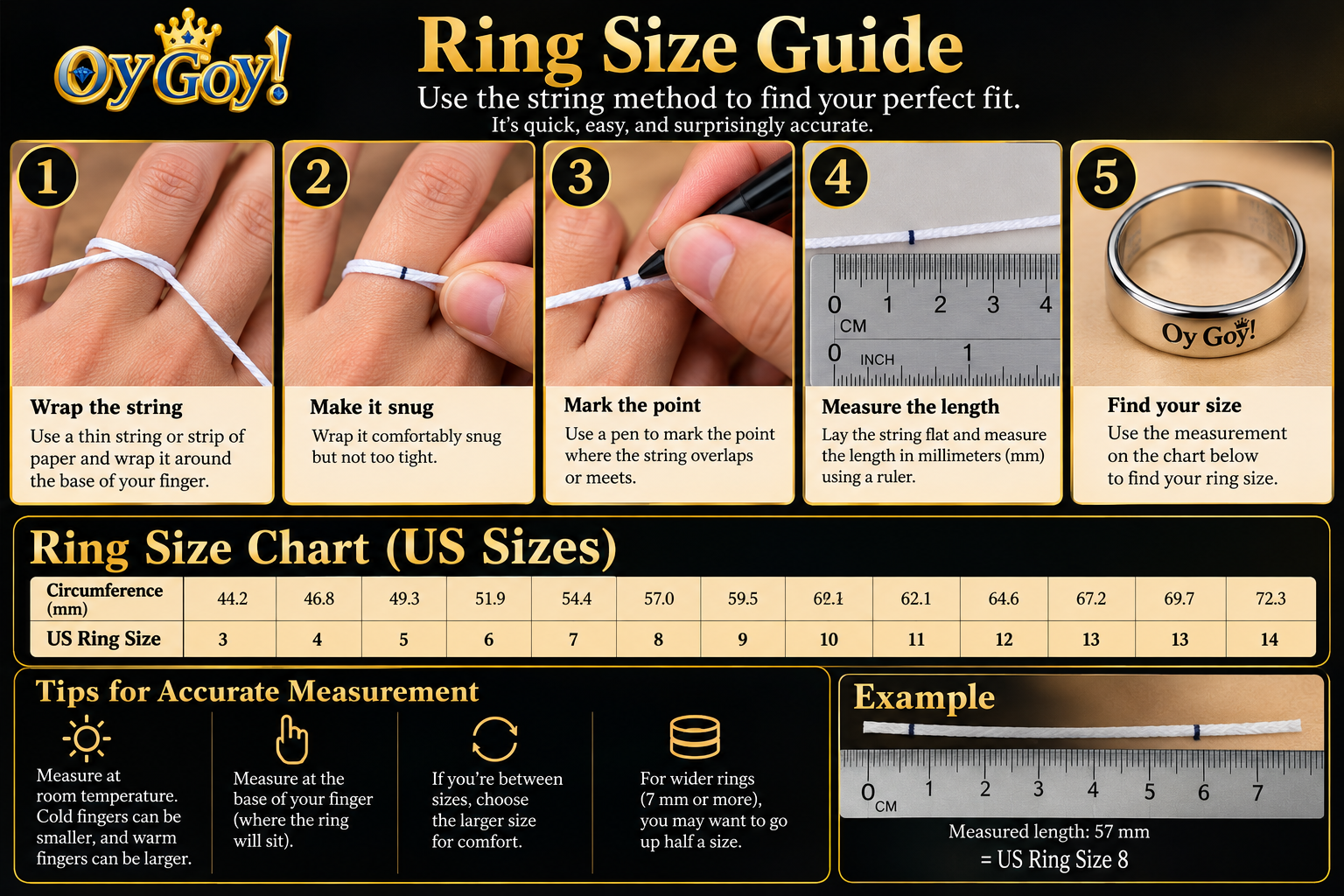
How to Measure Your Ring Size Using String
- Gather supplies. Use a thin, non-stretchy string (or preferably a narrow strip of paper), a pen, and a millimeter ruler.
- Wrap around your finger. Place it around the base of the finger where you'll wear the ring. Keep it snug but comfortable, not tight.
- Mark the overlap. Where the string or paper meets itself, make a clear mark.
- Measure in millimeters. Lay it flat and measure from the end to the mark. This is your finger's approximate circumference.
- Find your US ring size. Compare the measurement with the chart below. If between sizes, consider the larger size and verify with a ring sizer.
- Repeat. Measure 2–3 times, preferably later in the day when your hands are comfortably warm. Make sure the ring will pass over your knuckle.
Important: String can stretch or compress, so this method is approximate. A professional jeweler or a properly sized ring gauge is more accurate, especially for a wider ring band.
US Ring Size Reference
Approximate inner circumference for common US sizes:
| US Ring Size | Finger Circumference |
|---|---|
| 5 | 49.3 mm |
| 6 | 51.9 mm |
| 7 | 54.4 mm |
| 8 | 57.0 mm |
| 9 | 59.5 mm |
| 10 | 62.1 mm |
| 11 | 64.6 mm |
| 12 | 67.2 mm |
This chart uses standard nominal US sizing values rounded to 0.1 mm. Half sizes and wider bands may need a different fit.
Helpful Sizing Tips
Measure the exact finger and hand you intend to wear the ring on. Fingers can change size with temperature and throughout the day. Wider bands, such as 7 mm rings, may feel tighter than narrow bands. If possible, try a ring of the same width before ordering.
For a surprise gift, borrowing a ring that fits the recipient's intended finger and having a jeweler measure it is often a better choice.
Questions? We're Here.
Reach out to us at richie@oygoy.shop.
BACK TO HOME →